

Complete this survey in support of the town center plan
For more information on what’s happening, click here to read on the City’s webpage. Keep reading this if you want to read about my reasoning why and how I think major concerns can be addressed.
we can have nice things, like a real downtown
Sherwood, Canby, and West Linn are all examples of similar sized towns that have done this. We can do this to, if we stick to the plan.
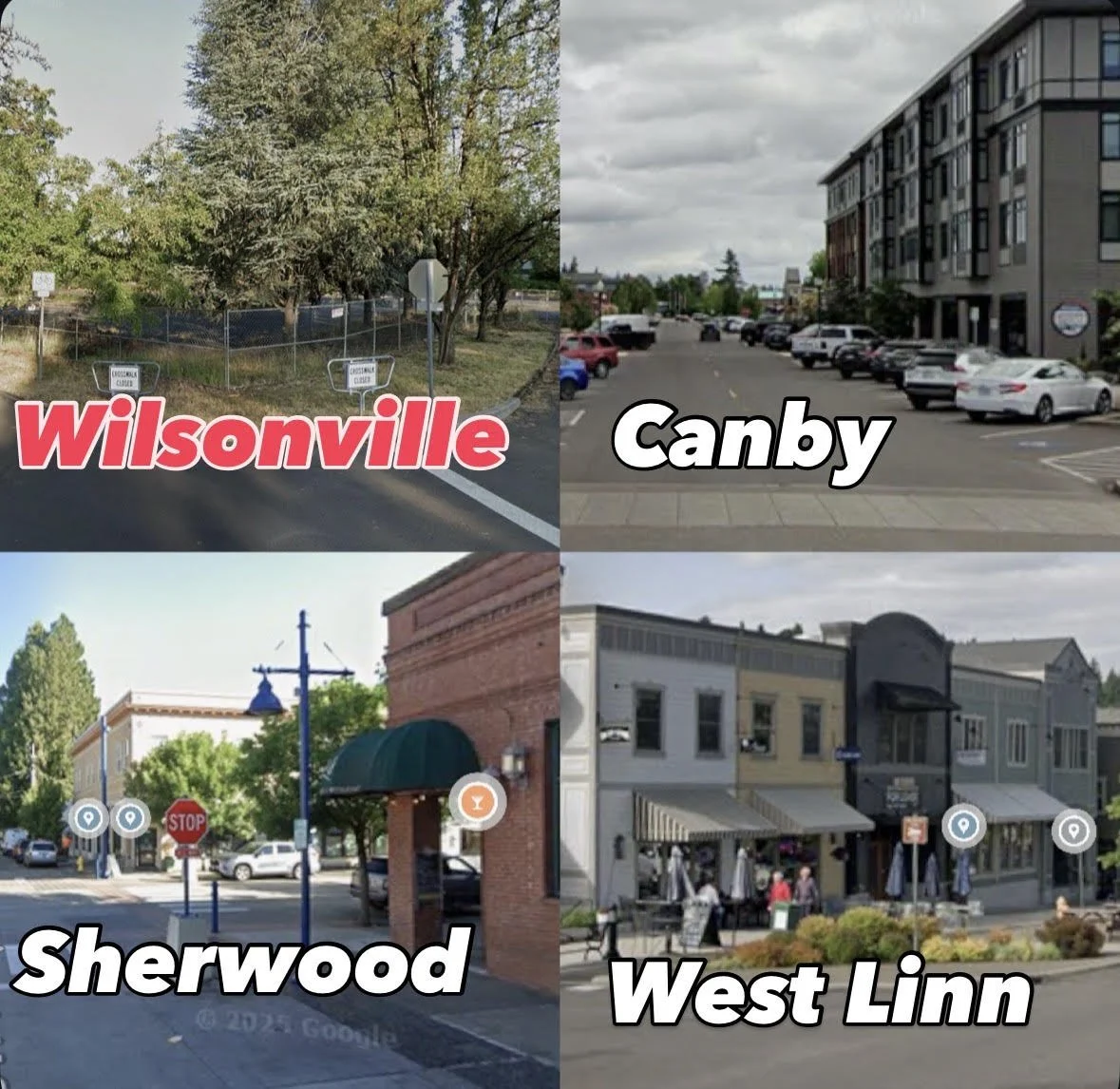
These are not quality images. But, what is quality are these gathering places in neighboring communities.
Economic, climate, and human reasons for why we need a downtown
1. with declining revenue forecasted for wilsonville, our town center plan will bring in more tax revenue.
Our existing town center’s single-story commercial retail and office buildings will bring a future of tax revenue that is static and limited. The only way you’ll increase it is through new development, which with is limited with our built environment and foreseeable economic future. With the Town Center Plan, we’ll see a mix of commercial, office, and residential development that will bring in more revenue initially, raise the ceiling on the amount of revenue that land was paying previously, and by interjecting residential it will support higher end retail and restaurant development that will in turn bring in more revenue when those new businesses come in. The “two over one” (meaning two stories of residential over one story commercial) is a successful downtown development concept that has been replicated in towns much smaller than ours since America’s inception.
2. We need more home choices of all shapes and sizes so that Wilsonville can be a place where all kinds of people can afford to live.
When we allow only certain expensive building types, like single-family detached homes, it determines who can or cannot afford to live in a community--the real character of the neighborhood. Where we live shapes our lives and our long-term success—from the length and cost of our commute, where we are able to shop for groceries, and our children’s schools. To expand opportunity for all, we need to stick to the long-standing plan to provide affordable home choices in places close to jobs, schools, transit, parks, and businesses. The public safety and transportation network have been built to support it.
3. We need to support seniors aging in place and youth.
For many young people aspiring to homeownership, a "starter home" is out of reach. Since 1970, average sizes for new, single-family detached houses have soared by 64 percent. That's a huge driver of rising home costs. By providing housing that supports families saving to buy their first home, while living near amazing parks, recreation, and education assets we can help young Oregonians start building their American dreams, and let many older Oregonians savor their own.
4. Diverse housing is an essential way to fight climate change and reduce school segregation.
We are in a climate crisis and we need to start offering more housing choices and options around the areas that our infrastructure and service are set up to support, like downtown. By not offering more housing options, people will have to look for housing that is further away. With our school system being a shining star in the community, we need these types of diverse housing to ensure that our schools have kids of all incomes and races.
Our choice
We have a choice; we either stick to the long-standing plan for downtown that supports diverse housing types for all kinds of people, or we restrict housing to the most expensive and exclusive, pushing people further from jobs, schools, and transit and forcing longer, costlier commutes.
About the Wilsonville Town Center Plan
The Wilsonville Town Center Plan was adopted unanimously by the City Council in 2019 following two years of extensive public engagement. The Plan details the community’s expressed desire for a Town Center that is a vibrant, walkable destination that inspires people to come together and socialize, shop, live, and work in the heart of Wilsonville.
Subsequently, Town Center development has been stalled by the COVID-19 pandemic, economic uncertainty, and the narrow defeat of a May 2024 advisory vote to gauge community sentiment for funding new public infrastructure development through tax increment financing.
Addressing Concerns
this will bring too much traffic
This is my biggest concern.
With how ODOT has screwed up the Boone Bridge replacement, I worry that our community is going to have to roll the dice daily on whether on not I-5 congestion is going to put us in gridlock. I worry about the environmental impacts that congestion fumes will bring us. I worry about how angsty, racing drivers will make our side streets unsafe.
That said, we don’t need to sacrifice our dream of a downtown. We can move forward with quality community development and advocate strongly for ODOT to get things in order at Boone Bridge.
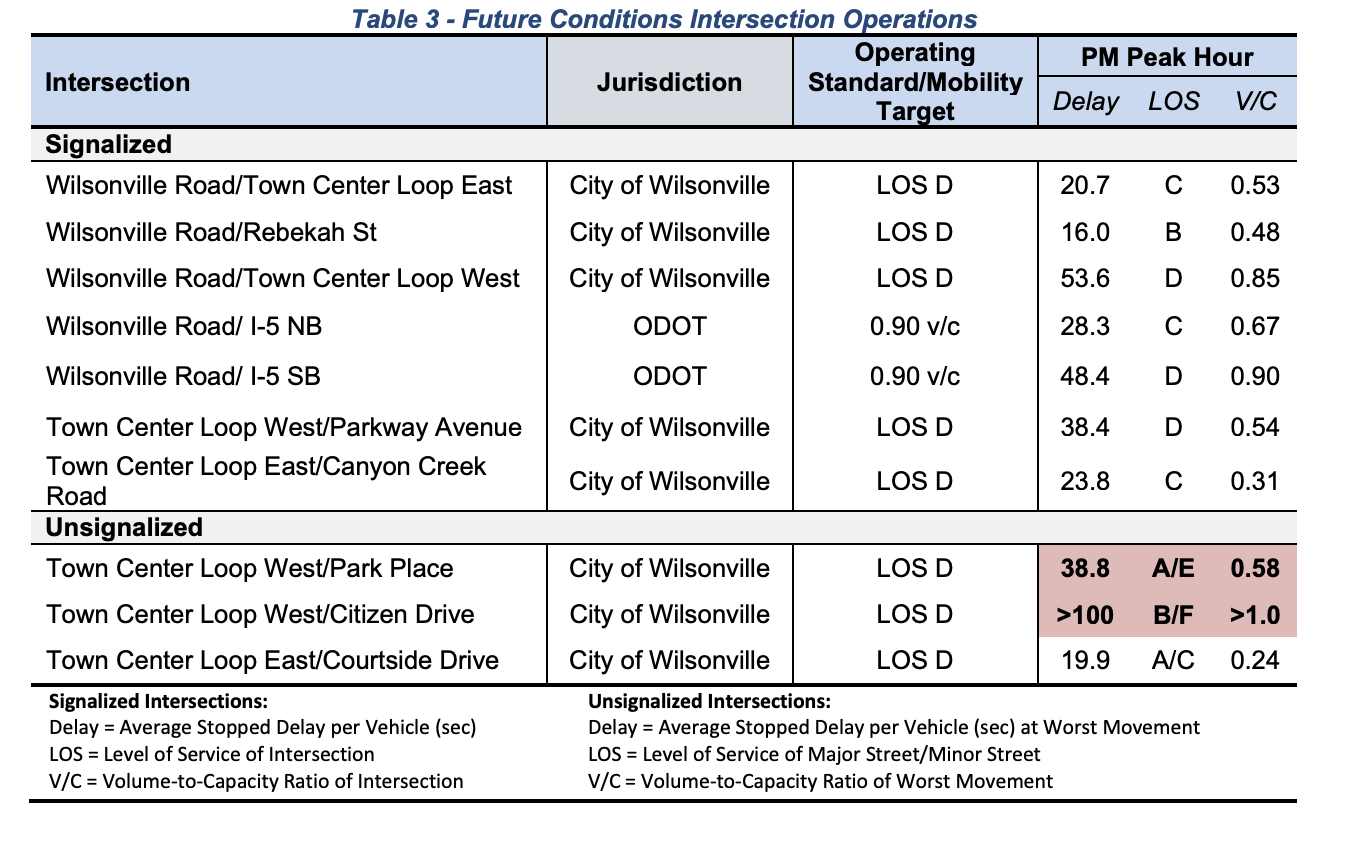
Linked here is the transportation analysis from DKS that supported the town center plan. The most important page in this document is what is below. This indicates that, among all the new town center models, only the intersections adjacent to Starbucks and Dutch Brothers would fail. These intersections are a mess today, and as development comes online, they will be addressed.
we have enough apartments
Historically, if you look at how cities Massachusetts or Europe have developed - I’m naming those because they have similar urban growth boundaries land use regulations - the 50% mix of multi-family units in Wilsonville is average.
Apartments will serve people who want to age in place in our community. Especially when they can be located in close location to the grocery store, restaurant, and park.
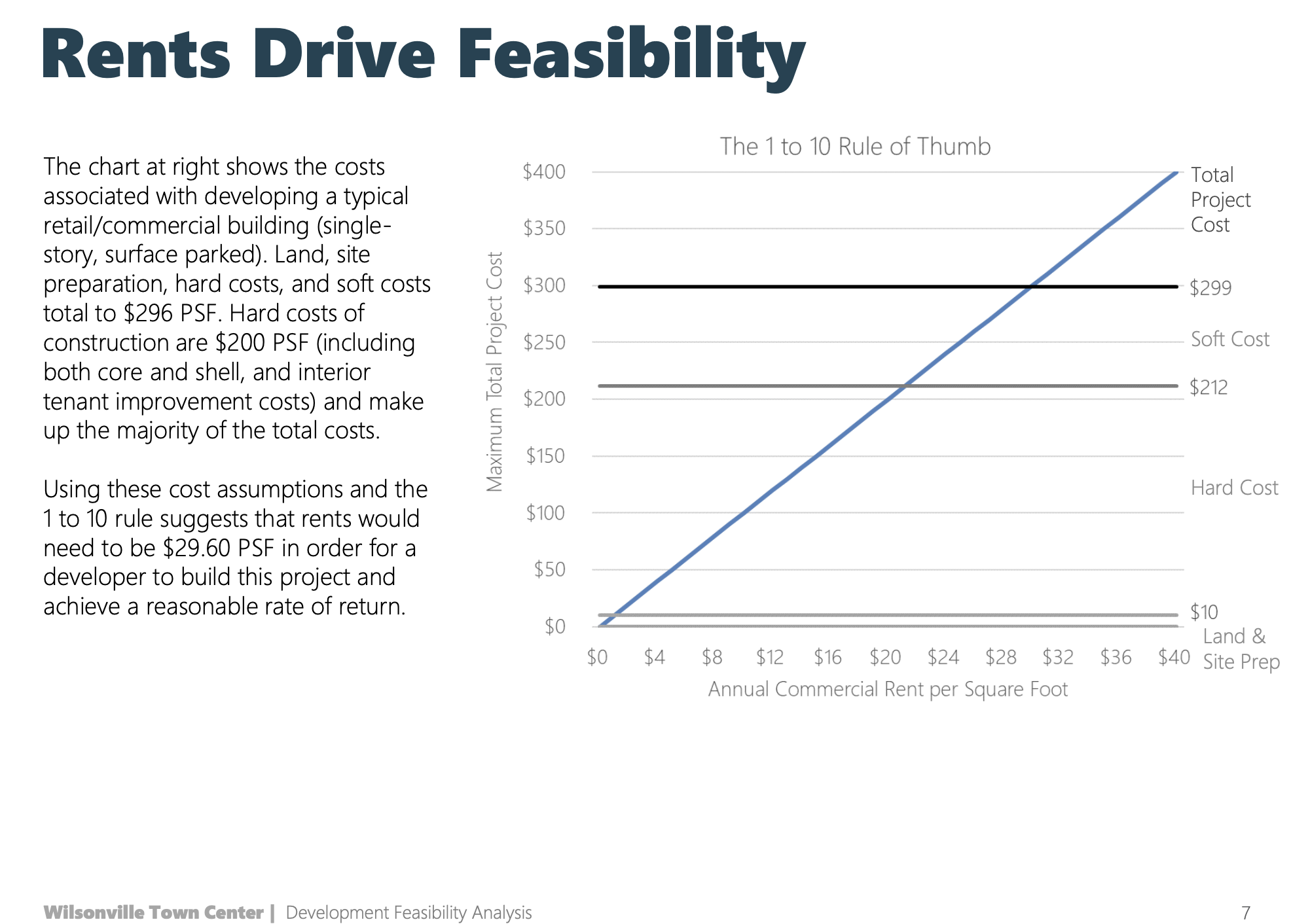
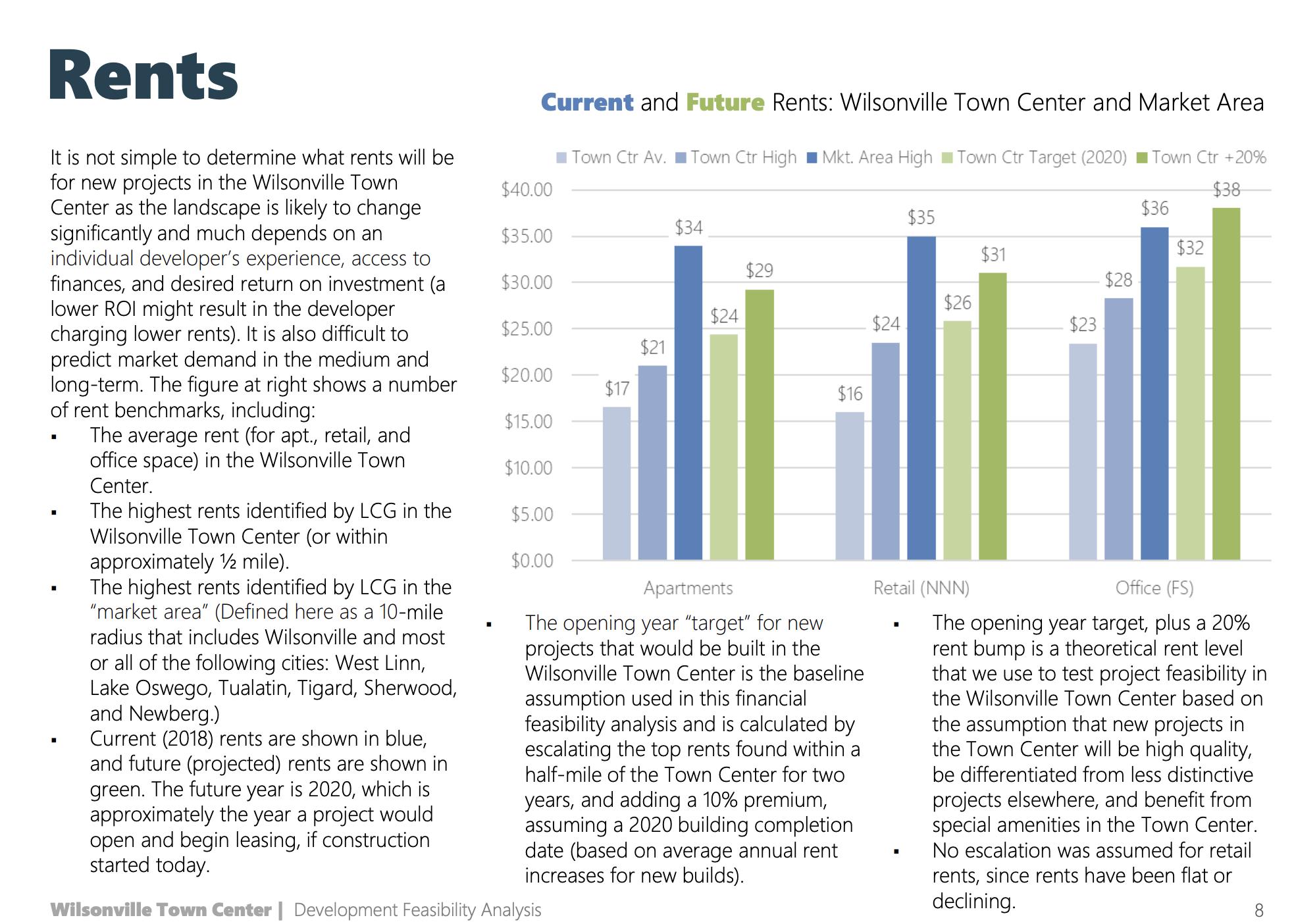
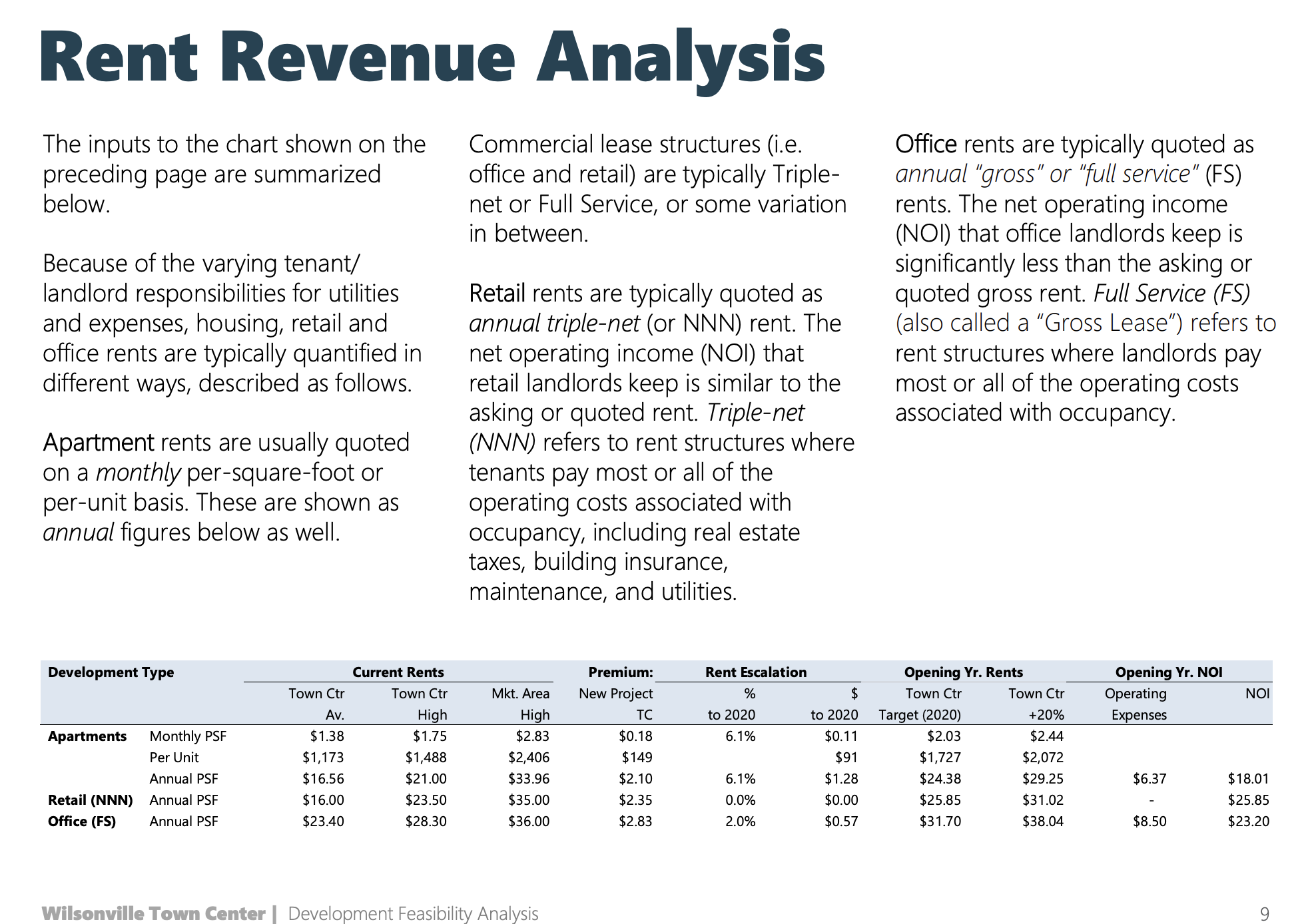
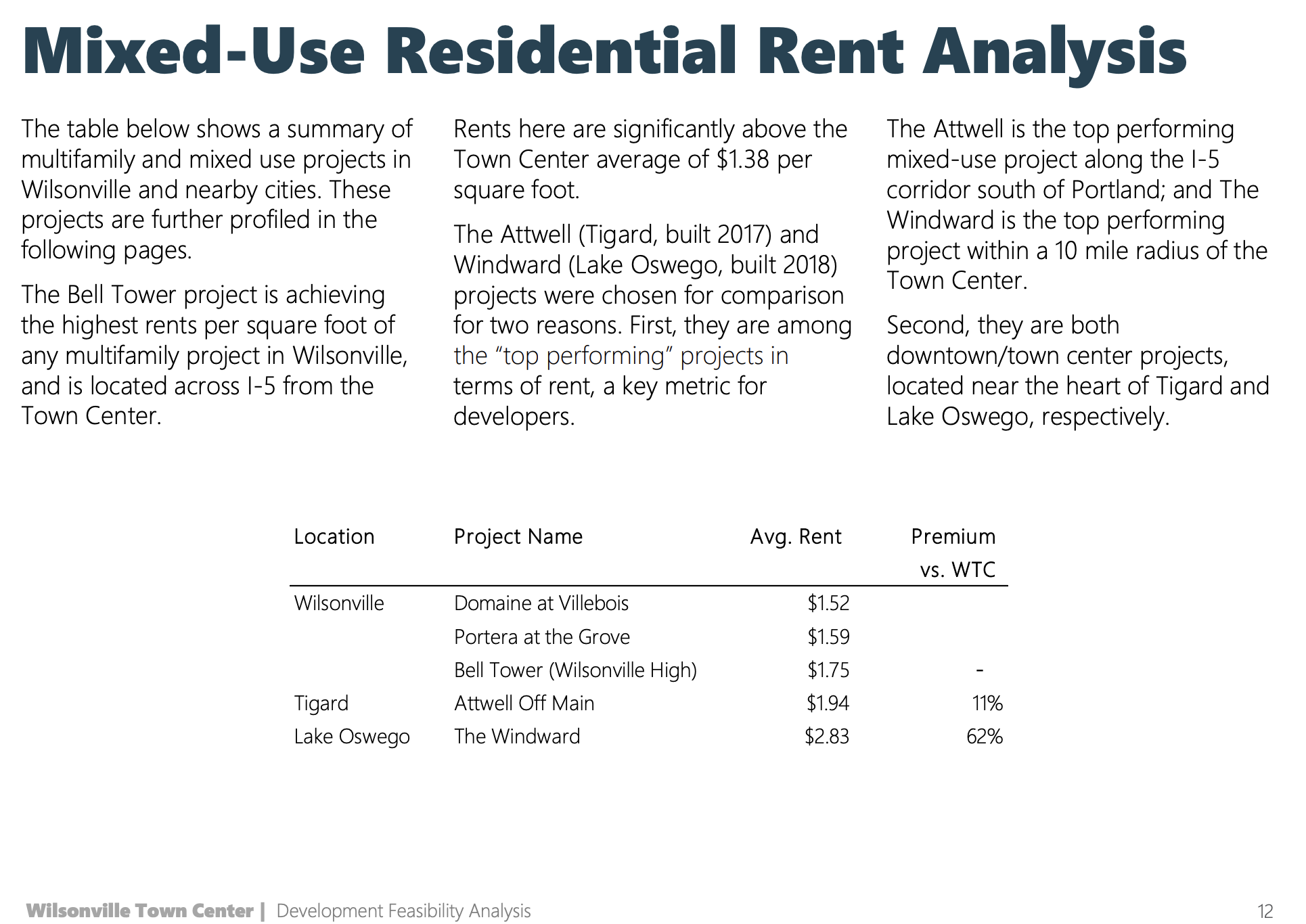
Linked here is the development feasibility and market analysis by Leyland Consulting Group for the town center plan. It helps add depth to the points I made above for the economic boost that additional residential will add to bolster our commercial offerings and viability.
infrastructure cost will be too expensive
Linked here is the infrastructure analysis from the town center plan. Water, stormwater, and waste analysis projections were run and for each of these systems, the existing capacity could take on the additional proposed development. I paid most attention to the 12” water main and waste with adding the new residential units, and the analysis shows that these could be accommodated.
As for the cost to you and me today, there will be none and we may benefit with existing water and sewer costs being shared by additional people paying into the system.